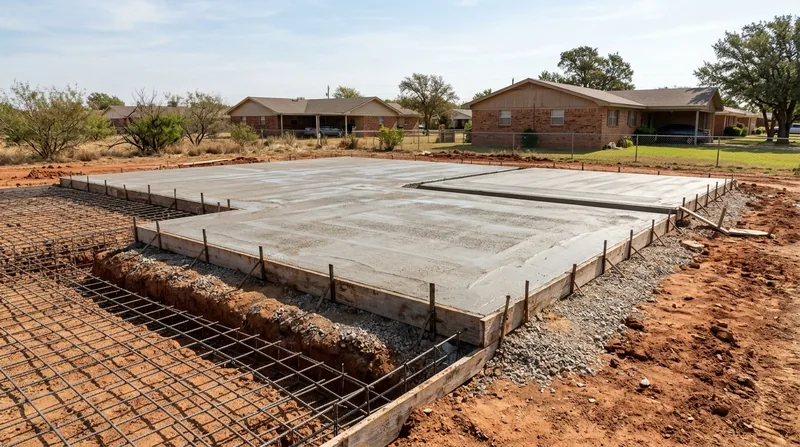




Concrete slabs and foundations in Wichita Falls demand more than standard pours. The Red River Valley's reddish expansive clay shrinks during long droughts and swells after heavy spring rains, causing slabs to heave, crack, and settle if the base, steel, and drainage aren't engineered correctly. Whether you're pouring a foundation for a new garage, shed, room addition, or building from the ground up, the difference between a slab that lasts 30 years and one that fails in five comes down to proper compaction, reinforcement, and understanding local soil behavior. Wichita Falls Concrete has spent years building slabs on this tricky terrain, from the Craftsman bungalows near Downtown to the newer brick homes spreading toward Lake Wichita and Iowa Park. We know what it takes to anchor a structure on clay that moves.
Why Concrete Slabs and Foundations Matter in Wichita Falls
Expansive clay is the hidden enemy of concrete in this region. When summer heat and dry wind pull moisture from the soil, the clay shrinks and creates voids beneath the slab. When spring thunderstorms and hard freezes saturate the ground, the clay expands and pushes upward. This cycle repeats year after year, and a poorly built slab will crack, settle unevenly, and eventually require costly repairs or replacement. A properly engineered foundation with the right thickness, steel reinforcement, and compacted base resists this movement and keeps your structure level and sound.
- We compact the subgrade in lifts to eliminate voids that allow the clay to shift beneath the slab.
- We specify steel reinforcement (wire mesh or rebar) to bridge small cracks and distribute load evenly across the foundation.
- We pour to the engineered thickness required by your structure's load and the soil conditions on your site.
- We ensure proper drainage and slope so water sheds away and doesn't saturate the clay around the foundation.
- We follow local setback and width limits for driveways, walkways, and curb cuts in Wichita Falls and surrounding areas.
A solid foundation is the difference between a structure that settles and one that stays put through decades of Wichita Falls weather.
Local reality: Homes in Floral Heights and near the Country Club often sit on older, shallow foundations that were never reinforced. When we pour a new garage slab or add a room foundation, we go deeper and reinforce properly so the new structure doesn't mirror the problems of the old house.
For more information on local permitting and regulations for foundation work, visit the City of Wichita Falls website.
How We Build Concrete Slabs and Foundations in Wichita Falls
Every slab starts with the soil. We don't just show up and pour. We look at the grade, test the subgrade, and plan the base preparation. For garage slabs, shed foundations, and room additions in Wichita Falls, we follow a proven process that accounts for local clay behavior, seasonal moisture swings, and the weight your structure will carry.
- We excavate to the required depth and remove soft or organic material that could compress over time.
- We compact the subgrade in 4 to 6 inch lifts using a plate compactor or vibratory roller to achieve 95 percent standard Proctor density.
- We lay a 4 to 6 inch gravel base, compact it, and ensure proper drainage pitch away from the foundation.
- We set up forms and steel reinforcement (wire mesh, rebar, or both) according to the design and local requirements.
- We pour the concrete to the specified thickness, finish the surface level and smooth, and protect it during cure.
- We manage the cure time and conditions so the concrete gains strength without cracking from rapid drying or temperature shock.
The result is a foundation that resists the push and pull of Wichita Falls clay and stays stable for decades.
Real example: A homeowner in Tanglewood wanted to add a 16 by 20 foot room to their brick home. The existing house sat on a shallow foundation, and the new room needed to tie in without settling. We dug deeper, reinforced with rebar, and poured a 5-inch slab on 6 inches of compacted gravel. Two years later, no cracks, no settlement, and the room is solid.
If you're planning a new structure or need a slab repair first, check out our concrete repair and resurfacing services to see how we handle existing slab issues.
Concrete Slab and Foundation Methods
| Approach | Description | Best for |
|---|---|---|
| Standard Slab on Grade | 4 to 6 inch concrete poured on compacted gravel base with wire mesh or rebar reinforcement. | Garage slabs, shed foundations, utility buildings, and light commercial pads in stable soil. |
| Engineered Foundation with Footings | Deeper perimeter footings below frost line (18 to 24 inches in Wichita Falls) with stem wall and interior slab pour. | Room additions, new home construction, and structures on expansive clay that require structural tie-in. |
| Post-Tension Slab | Cables embedded in the concrete are tensioned after cure to counteract upward movement from expansive clay. | High-value homes, additions on clay, and structures where cracking from heave is a known risk. |
| Thickened Edge Slab | Thicker concrete (6 to 8 inches) at the perimeter with thinner interior (4 inches) to reduce edge lift from clay movement. | Garages, basements, and slabs in clay where edge heave has been a problem in the neighborhood. |
Concrete Slabs and Foundations Cost in Wichita Falls: What to Expect
Concrete slab pricing in Wichita Falls starts at around $5 per square foot for a standard garage slab on well-prepared ground. A typical 20 by 24 foot garage slab (480 square feet) runs $2,400 to $3,200 depending on site access, base preparation, reinforcement type, and whether you need any special finishes. Shed foundations and small utility slabs can be less; engineered foundations with footings and stem walls for room additions or new construction cost more because they involve deeper excavation, frost-line footings, and structural design work.
Several factors move the price up or down:
- Soil conditions and subgrade prep: clay that is soft or wet requires more compaction work and thicker base material.
- Reinforcement type: wire mesh costs less than rebar, and post-tension systems cost more because they require specialized equipment and engineering.
- Thickness and design: a 4-inch slab is cheaper than a 6-inch slab, and engineered footings add cost because they go deeper and require structural plans.
- Site access: if concrete trucks can't reach the slab area, we pump or wheelbarrow the concrete, which adds labor and time.
- Finish: a broom finish is standard; smooth trowel, exposed aggregate, or colored concrete will increase the per-square-foot rate.
The best way to know the real cost for your project is to get two or three estimates from insured contractors. Bring site photos, soil conditions, and a sketch of the slab size and location. A free estimate takes 15 to 30 minutes and gives you a realistic number before you commit.
For detailed pricing on all our services and past project examples, visit our full pricing page.
What to Look for When Hiring a Concrete Contractor Near Wichita Falls
Not all concrete work is equal, and not all contractors understand the challenges of building on Wichita Falls clay. When you're shopping for a slab or foundation contractor, focus on the things that actually matter: insurance coverage, track record, and whether they ask the right questions about your soil and site.
- Verify that the contractor carries general liability insurance and workers compensation coverage for all crew members.
- Ask for references from recent jobs in Wichita Falls, Burkburnett, Iowa Park, or Henrietta where they've poured slabs or foundations on clay soil.
- Get at least two or three estimates so you can compare approach, materials, timeline, and price without feeling locked in.
- Ask whether the contractor will pull local permits and handle curb cuts, right-of-way work, or HOA approval if your property requires it.
- Confirm that the contractor understands local drainage requirements and frost-line depth for footings in your area.
A good contractor will ask you questions about your site, soil conditions, and what the slab is for. They won't just show up and pour.
Ready to get started? Contact us for a free, no-obligation estimate or call (940) 400-3370. We'll walk your site, understand your needs, and give you a straightforward price.
Concrete Slabs & Foundations in Wichita Falls: Pricing Guide
| Service | Price | Details |
|---|---|---|
| Standard Garage Slab | Starting at $5/sq ft | 20 by 24 foot slab on compacted base with wire mesh reinforcement, finished level and smooth |
| Shed or Utility Foundation | Starting at $4.50/sq ft | Smaller footprints with basic prep and 4 inch pour, ideal for outbuildings and equipment pads |
| Room Addition or New Construction Foundation | Starting at $8/sq ft | Engineered footings below frost line, stem wall, interior slab, rebar reinforcement, structural tie-in to existing home |
| Post-Tension or Thickened-Edge Slab | Starting at $7/sq ft | Specialized methods for expansive clay resistance, higher cost reflects engineering and specialized concrete work |
| Site Prep and Excavation | On estimate | Soft soil, poor drainage, or difficult access requires site-specific assessment and compaction plan |
| Free Estimate | No charge | Response within 24 hours at (940) 400-3370, includes site walk and realistic pricing for your project |
Indicative pricing, the exact cost depends on square footage, finish, and site access. Free personalized estimate within 24h at (940) 400-3370.


