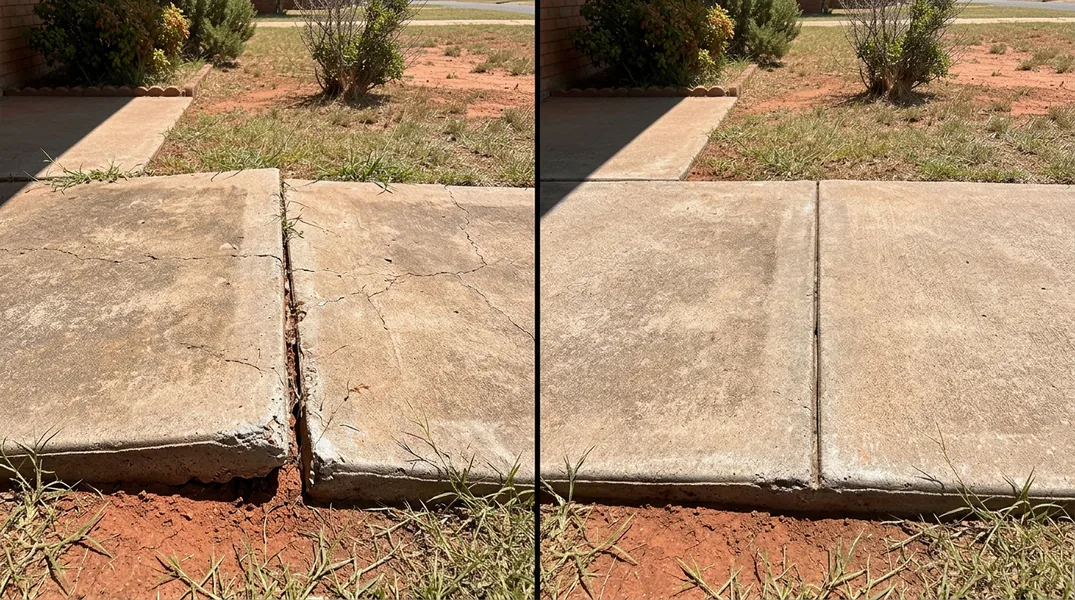
Understanding Expansive Clay in Wichita Falls
If you own a home or business in Wichita Falls, you're likely familiar with the region's distinctive red clay soil. This clay is not just a cosmetic feature of our landscape, it's a geological reality that directly impacts concrete structures. Expansive clay, also called montmorillonite clay, has a unique property: it swells significantly when it absorbs moisture and shrinks when it dries out. In Wichita Falls, where we experience both wet seasons and prolonged dry periods, this cycle repeats year after year, creating tremendous pressure on concrete foundations, driveways, and patios.
The problem becomes especially pronounced during our region's drought cycles. When the soil beneath your concrete dries out, it can shrink by several inches, leaving voids and causing the concrete slab to settle unevenly. When rain returns and the clay rehydrates, it expands again, pushing upward with enormous force. This constant movement is what causes the cracking, buckling, and displacement that homeowners see in their Concrete Driveways and other outdoor concrete surfaces. Understanding this cycle is the first step toward protecting your investment and knowing when professional help is needed.
How Drought and Wet Cycles Create Concrete Cracking
Concrete cracking in Wichita Falls is rarely a simple matter of poor installation or material failure. Instead, it's often a direct result of the soil's behavior beneath the slab. During a drought, the clay soil loses moisture and contracts. This creates gaps between the soil and the concrete, and the slab may drop into these voids or shift laterally. When moisture returns, the clay swells rapidly, exerting upward pressure that can exceed the tensile strength of concrete. The result is visible cracking, often in a pattern that looks like a map or spider web across the surface.
The severity of cracking depends on several factors: the thickness and reinforcement of your concrete, the depth of the clay layer, the extent of the drought, and how quickly moisture returns. A single dry summer followed by heavy spring rains can trigger significant damage. Over multiple cycles, even well-installed concrete can develop structural problems. Hairline cracks may seem minor, but they allow water to penetrate the slab, accelerating deterioration and making the problem worse. This is why homeowners in Wichita Falls who notice cracking should take it seriously and consider professional Concrete Repair & Resurfacing before the damage spreads.
Clay Soil Slab Movement: Why Your Driveway Isn't Level Anymore
One of the most frustrating issues homeowners face is when their concrete driveway or patio becomes uneven. You may notice a trip hazard where two slabs meet, or a noticeable hump or depression in what used to be a smooth surface. This slab movement is almost always caused by clay soil behavior. As the expansive clay beneath your concrete expands and contracts, the slab rides along with it, but not uniformly. Different sections may move at different rates depending on soil moisture, compaction, and the presence of tree roots or utilities below.
The problem is compounded in Wichita Falls because our clay is particularly reactive. Even a difference of a few feet in soil moisture can cause one section of a driveway to rise while another settles. Over time, these movements accumulate. A driveway that was perfectly level when installed can develop significant displacement within five to ten years. This movement doesn't just affect appearance, it creates safety hazards, makes it difficult to open garage doors, and can damage vehicles. If you're experiencing this issue, it's time to get a professional assessment and discuss repair options with a concrete specialist.
Concrete Repair Near Me: When to Call a Professional
Not all concrete damage requires immediate repair, but knowing the difference between cosmetic cracking and structural problems is important. Hairline cracks that are less than one-eighth inch wide and don't show signs of widening may be managed with regular monitoring and preventive maintenance. However, cracks wider than one-quarter inch, cracks that are actively growing, stepped or offset slabs, or surfaces with multiple cracking patterns should be evaluated by a professional. In Wichita Falls, the local soil conditions mean that cracks often indicate ongoing movement rather than a one-time event.
When you contact Wichita Falls Concrete at (940) 400-3370 for a free estimate, our team will assess the extent of the damage and determine the best repair strategy. For minor cracks, epoxy or polyurethane injection may seal the damage and prevent water infiltration. For more severe movement or displacement, the solution might involve mudjacking (raising a settled slab), concrete replacement, or in some cases, addressing the soil conditions beneath the slab. The key is to act before small problems become expensive structural issues. Our experience with Wichita Falls clay means we understand the root cause of your problem and can recommend solutions that account for future soil movement.
Protecting Your Concrete: Prevention and Long-Term Solutions
While you can't change the clay soil beneath your Concrete Driveways, you can take steps to minimize the impact of soil movement. One of the most effective strategies is moisture management. Maintaining consistent soil moisture around your concrete reduces the extreme expansion and contraction cycles. This might include proper drainage to direct water away from the foundation during heavy rains, or in some cases, irrigation during dry periods to keep soil moisture stable. Avoid allowing water to pool against your concrete, and ensure gutters and downspouts direct water at least four to six feet away from structures.
Another important consideration is the quality of the concrete installation itself. Thicker slabs with proper reinforcement (rebar or wire mesh) and a solid, well-compacted base can better withstand soil movement. If you're planning new concrete work, such as Concrete Patios or additional driveways, discussing soil conditions and movement potential with your contractor is essential. Some projects may benefit from specialized techniques like post-tensioning or the use of fiber-reinforced concrete that can handle movement better than standard concrete. Regular maintenance, including sealing your concrete every two to three years, also helps by reducing water penetration and slowing the deterioration process. These preventive measures won't eliminate the effects of clay soil, but they can significantly extend the life of your concrete and reduce costly repairs down the road.
Concrete Repair Cost in Wichita Falls: What to Budget
The cost of concrete repair varies widely depending on the extent of damage, the repair method chosen, and the size of the affected area. Minor crack repair might cost a few hundred dollars, while full slab replacement for a large driveway could run several thousand. In Wichita Falls, where clay soil movement is a known factor, it's important to understand that your pricing will reflect the local conditions and the need for solutions that account for ongoing soil movement. Mudjacking, for example, is often less expensive than full replacement but may only be a temporary solution if soil conditions continue to shift.
Rather than guessing at costs, we recommend getting a professional evaluation. Contact Wichita Falls Concrete at (940) 400-3370 or request a free estimate to discuss your specific situation. Our team can provide detailed pricing based on the actual damage and recommend the most cost-effective solution for your needs. In many cases, addressing problems early costs less than waiting for damage to worsen. We serve Wichita Falls and the surrounding area, and we're familiar with how local soil conditions affect concrete longevity and repair needs.
Looking for a professional concrete contractor in Wichita Falls? Wichita Falls Concrete responds fast for all your concrete needs.
Get a Free QuoteOur services: Concrete Driveways · Concrete Patios · Stamped & Decorative Concrete